
Frederick Douglass: Prophet of Freedom- Review
A reminder that nothing is ever decided, not finally. That everything worthwhile has to be litigated and relitigated every generation. - rhk
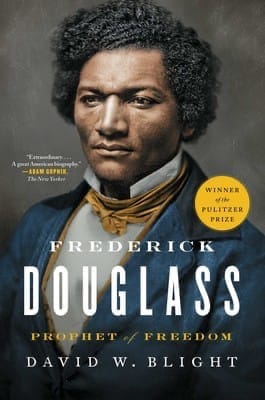
Frederick Douglass: Prophet of Freedom by David W. Blight is one of those rare biographies that feels less like a history lesson and more like a sustained encounter with a living mind. I found it thoroughly absorbing. Blight presents Douglass not simply as an abolitionist icon, but as a thinker, strategist, and evolving human being whose ideas were forged in constant dialogue with the crises of his age. The narrative moves confidently between public events and private struggles, showing how Douglass learned, revised himself, and refused intellectual stagnation.
How I Read: Kindle text paired with the synchronized audiobook
I read in a peculiar but, for me, highly effective way: Kindle text paired with the synchronized audiobook. The cursor tracks the narration on the page, letting me adjust playback speed and gradually increase it as my pace improves. When the material becomes dense, I slow the audio and backtrack a page or two. Listening while reading substantially increases my absorption and keeps my attention fixed on the work; distractions fade because both my eyes and ears are engaged in the same intellectual task. The result is not merely faster reading, but deeper concentration and better retention.
Blight also brilliantly tracks and condenses the changes across Douglass’s three autobiographies—Narrative of the Life of Frederick Douglass, an American Slave (1845), My Bondage and My Freedom (1855), and Life and Times of Frederick Douglass (1881; revised 1892). I had found the differences and contradictions among them difficult to follow in my own limited readings, but Blight clarifies how each version reflects a new stage in Douglass’s intellectual and political development. The book does justice both to Douglass’s writing and to the lived experience behind it.
Blight’s writing itself is lyrical and a genuine pleasure to read. Blight’s prose carries the rhythm and moral urgency of the subject without drifting into hagiography. Quotations are woven seamlessly into the story, allowing Douglass’s own voice to remain central. By the end, the reader understands why contemporaries saw him as more than a reformer — he appears as a moral interpreter of the American experiment. The book leaves a lingering sense of admiration, and, more importantly, a renewed appreciation for the power of words in shaping political and human freedom.